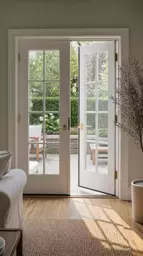



French doors can turn a wall into a light-filled opening, but material, glass, and installation choices decide whether they perform or leak. Here are 10 French door ideas worth saving — installed projects run into the low thousands. Frame material comes first — it sets your price band and maintenance schedule.
1. Wood French doors
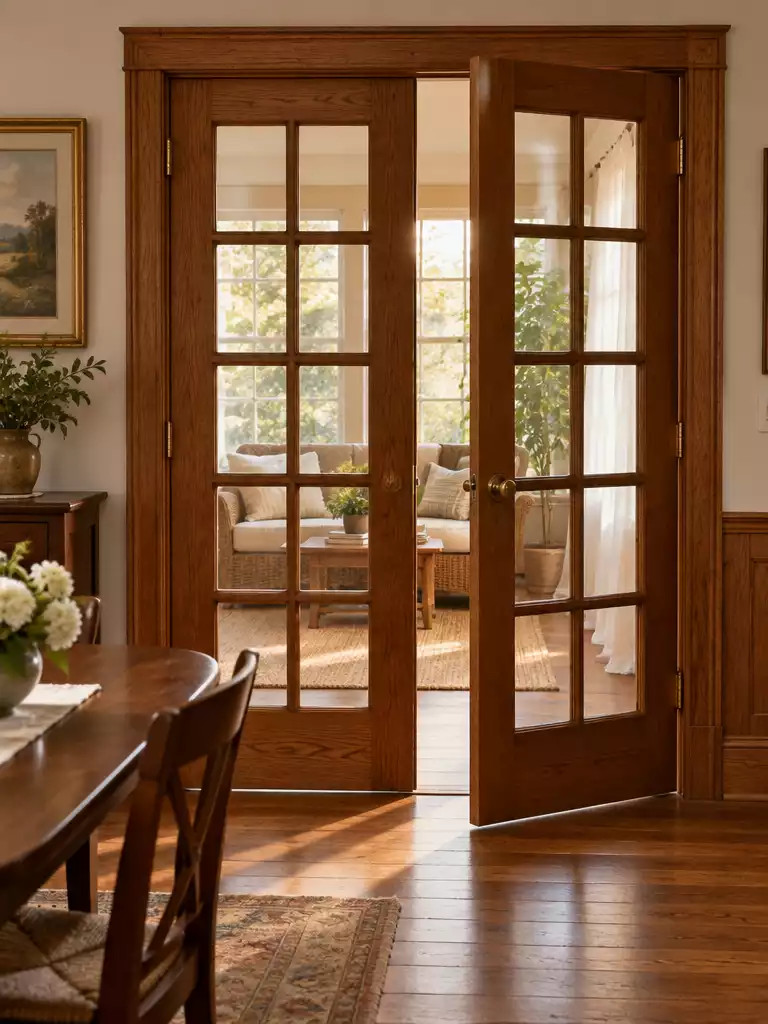
Stained to match your millwork, wood French doors turn an ordinary doorway into a feature.
As an Amazon Associate I earn from qualifying purchases. Affiliate links may earn me a commission at no extra cost to you.
Wood is the French door material you buy with your eyes — a stain matched to the dining room millwork, a paint color that lands exactly on the trim. It earns that look by asking for the most upkeep of any frame material on this list.
That tradeoff runs straight through the price: consumer cost guides put wood pairs at about $500 to $4,000, the widest spread of the five frame materials.
Why that spread is so wide
Species, paint or stain, panel and glass profiles, and custom sizes are what push a basic pair toward the top of the band.
Clad wood, custom builds, and premium product lines occupy the high end of the whole market.
These figures are market snapshots that vary with local labor and product tier — treat them as a range, not a quote.
The real commitment isn't the price band, though — it's the finish. A wood door lives on a recurring repaint-or-reseal cycle, not an occasional dusting.
The honest warning
Wood is the only material here where skipped upkeep shows up as damage to the door itself. Let the finish lapse, and moisture wear finds the door eventually.
Wood is your material if...
- You have a specific look to match — a paint color tied to existing trim or a stain matched to other millwork
- You'll genuinely keep up the repaint-or-reseal cycle, season after season
Pass on wood if...
- You want to install and forget — vinyl (item 5) is the lowest-maintenance budget path
- You need a low-upkeep exterior pair — fiberglass (item 2) is built for exactly that
In the tier structure consumer cost guides describe, wood sits in the middle-to-upper range — above vinyl's budget floor, below the clad and custom builds at the very top. If that finish schedule sounds like more than you'll actually do, the next idea, fiberglass, is the low-upkeep exterior alternative.
💡 Designer Note:
Stain and paint give you two different doors. Stain keeps the grain visible for a warmer, traditional feel; paint covers it completely for a crisp, solid color. And that repaint cycle you're signing up for doubles as design freedom — wood is the one frame you can restyle in a new color later, which vinyl can't do.
Fiberglass French Doors: Built to Handle Real Seasons Without Warping

If your doorway sees hot summers, frozen winters, and sticky August humidity, fiberglass is the material most cost guides land on first. Its reinforced composite construction barely swells or contracts, meaning the latch lines up in July just like it does in January.
This is the middle-ground pick: tougher against the elements than bare wood, far more refined-looking than basic vinyl. Here's what earns it that reputation:
- Cope with changing temperatures — minimal expansion means your door alignment stays put throughout seasonal changes
- Twice worth the investment? — Frequently offered pre-drilled/tapped for multipoint locks combined with Rebuilt Composite separation layers squeezing out thermal bridging
- Solid core insulation — foam-filled slabs boost R-values alongside quality dual-glazed units
- Mimics expensive wood beautifully — deep graining lets faux-oak or cherry tones pass casual inspection
- Barely needs upkeep — occasional hose rinse, touch-up caulk checks yearly, refreshed stain coat every decade-plus
Honest caveat: Expect sticker shock compared to hollow-core vinyl — solid fiberglass runs notably higher per unit, especially factory-prepped versions loaded with glass inserts.
| Factor | How Does It Stack Up? |
|---|---|
| Durability track record | Roughly 30+ years average functional life expectancy when sealed right |
| Versus steel competition | Resists rust spots long-term, dents harder, yet carries slightly leaner burglar-rating strength |
| Glass pairing potential | Handles triple-insulation packages nicely due to rigid skeleton rating tolerance |
The sweet-spot customer lives somewhere volatile — think Midwest hail storms or Gulf-region mugginess — paired with household members tracking mud daily past high-traffic thresholds constantly. Renters aside, nobody regrets choosing longevity once pollen season hits hard twice annually.
💡 Why the All-Rounder Label Is Earned:
The all-rounder label isn't earned by one standout feature — it's earned by the absence of a weak link. Because the frame holds steady through every season, weatherstripping stays compressed, glazing seals stay tight, and sweeps keep even contact with the threshold. Stability is what lets every other component keep doing its job.
The one condition: fiberglass's efficiency reputation assumes insulated glazing — the frame alone doesn't deliver it.
Picking a material feels like the weightiest call in this whole project, yet three practical answers carry most of it: your rough-opening dimensions, your climate and insulation priority, and your maintenance appetite. None of the three involves taste — settle them first, and the door that fits all three will frame the life you actually want in that room, from slow weekend mornings to an easy weeknight dinner with the panels open.
Measurements, climate, and upkeep decide the material — taste only decides which one you'll love looking at.
Steel French doors
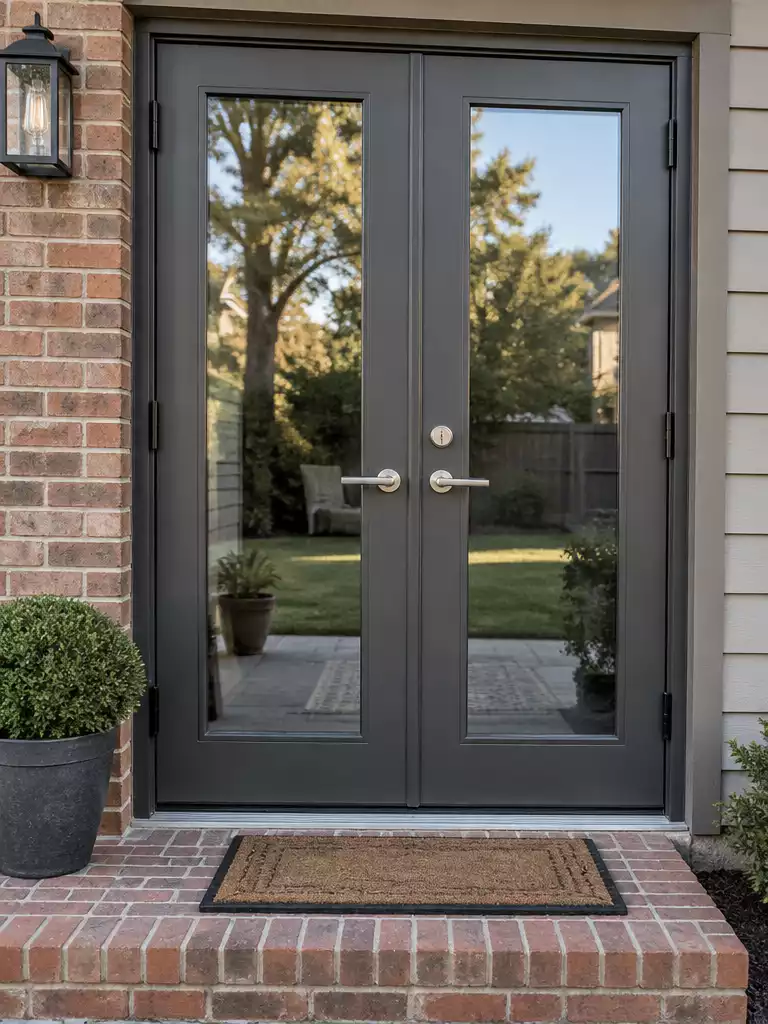
Steel French doors turn a vulnerable side entry into the toughest opening in your home.
When a door's job is security first — a ground-floor side entry, a rear opening facing the yard — steel is what consumer cost guides reach for. The material is usually presented as strong and secure, and that reputation is exactly why it lands on doors like these.
The finish is armor, not decoration.
A chip or scratch in steel's protective coating isn't a cosmetic issue. Where the coating fails, the door pays for it — damage is a repair item, not a style preference.
The price band: about $650 to $4,000.
That places steel in the middle tier of the five frame materials. Treat the figure as a market snapshot — local labor and product tier move it.
So who buys steel? Security-first homeowners, plainly — the reader whose entry sits at ground level on the side or back of the house and who wants the door itself to be the strong part.
One thing to carry forward: a strong slab is only part of security. The hardware and a frame that doesn't flex carry the rest — that's item 9's territory.
⚠️ Where Steel Buyers Go Wrong:
- Delaying the fix: a coating chip looks minor today, but on steel it only gets worse — touch up damage promptly.
- Assuming strength means efficiency: steel's security reputation says nothing about energy performance — insulated glazing delivers that (item 6).
- Door-price budgeting: exterior steel sets run above interior ones — weatherproofing, stronger glass, and better hardware all add cost.
4. Aluminum French doors
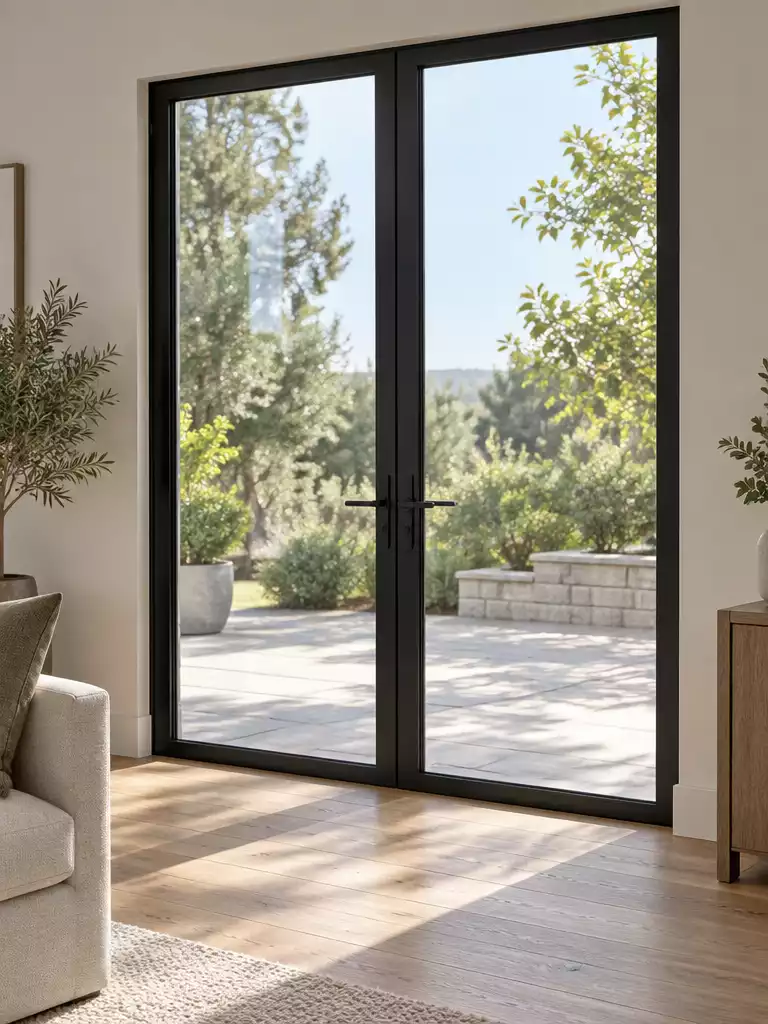
Slim frames, more glass — a wide, modern opening that floods the room with light.
Aluminum French doors are the thinnest frames on this list, and that slim profile is exactly what people are buying. More glass, less visible frame — a look the chunkier builds of wood, fiberglass, steel, and vinyl can't match.
The price of those thin sightlines is insulation: aluminum frames generally perform weaker than better-insulated alternatives. How much that matters comes down to one question — where the doors go.
If aluminum wins on looks, the budget shifts to glass.
Energy performance comes from insulated glazing and better-insulated construction, not the frame label alone. Item 6's glass package — double panes, low-E coating — is where the extra money belongs.
Price band: about $650 to $3,000. Consumer cost guides treat every published figure as a market snapshot — local labor and product tier move the final number.
Fit check: aluminum suits the modern-look priority — maximum glass, minimum frame. Skip it where insulation leads your list; that's fiberglass (item 2) territory.
The whole tradeoff in one line: slim sightlines, weaker insulation, spend on glass instead.
💸 Getting the Aluminum Look for Less:
- Go aluminum inside: interior sets generally cost less than exterior ones — a room divider gets the look without the weatherproofing bill.
- The one cut to refuse: single-pane glass on an exterior wall trades real comfort for small savings — double pane is the floor.
- Priorities on an exterior pair: weather-sealing, threshold work, and hardware aren't the place to save — a pair that leaks was never a bargain.
5. Vinyl French doors
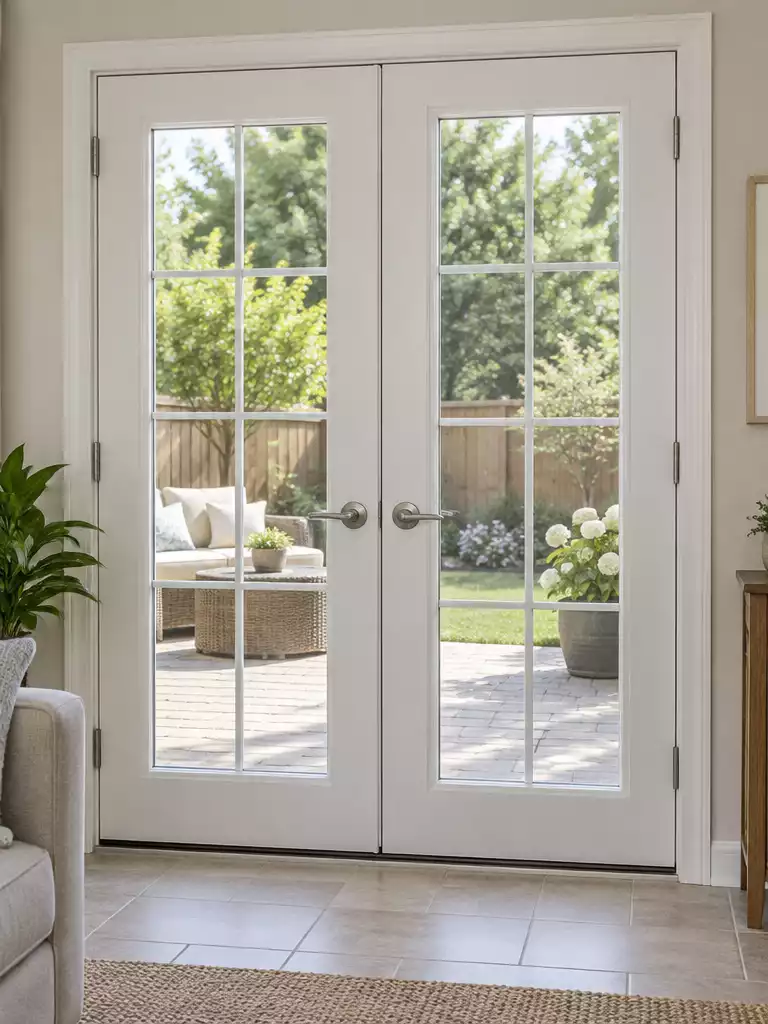
The budget-friendly French door pick that keeps maintenance off your weekend list.
At about $500 to $2,000, vinyl French doors sit at the lowest band of the five frame materials in this guide — nothing else starts that low. Vinyl's usual job is the budget choice, and that's worth saying plainly: for a basic pair, this is the material that makes the numbers work.
The low price comes with two ceilings, though, and it's better to see both before you order.
The first ceiling is design flexibility. Vinyl offers fewer color and finish options than any other material on this list, and unlike a wood frame, a vinyl frame can't be repainted when trim colors or tastes change.
What you buy is what you keep — the white pair that fits this year's palette is still the same white pair a decade from now. If that sounds limiting rather than simple, vinyl isn't your material.
The too-good-to-be-true listing
Consumer cost guides show basic sets priced even lower in some cases — but those figures reflect entry-level interior or simplified products, not typical exterior, code-compliant, weather-sealed installations. A suspiciously cheap French door listing is usually not an exterior-grade set.
Then the upside beyond price: vinyl carries the least demanding finish of the five materials. There's no refinishing cycle to sign up for — just an occasional clean and the periodic seal checks any exterior door needs anyway.
Item 10 compares all five materials on upkeep, and vinyl comes out of that comparison looking easy.
Vinyl French doors: the quick pick
- Choose vinyl for budget-first projects — closing off an interior opening, or an exterior swap where price leads and finish flexibility doesn't matter.
- Skip vinyl if you want custom colors or stains, or if the door is a front-of-house focal point — that's wood (item 1) or fiberglass (item 2) territory.
💡 Making Vinyl's Fixed Finish Look Intentional:
Because the frame color never changes, style around it instead of against it. A white pair reads cleanest when wall paint, window treatments, and door hardware complement it rather than compete. And since the frame saved you money, put the difference toward the glass package (item 6), where comfort actually gets decided.
6. Double-pane glass and Low-E coatings
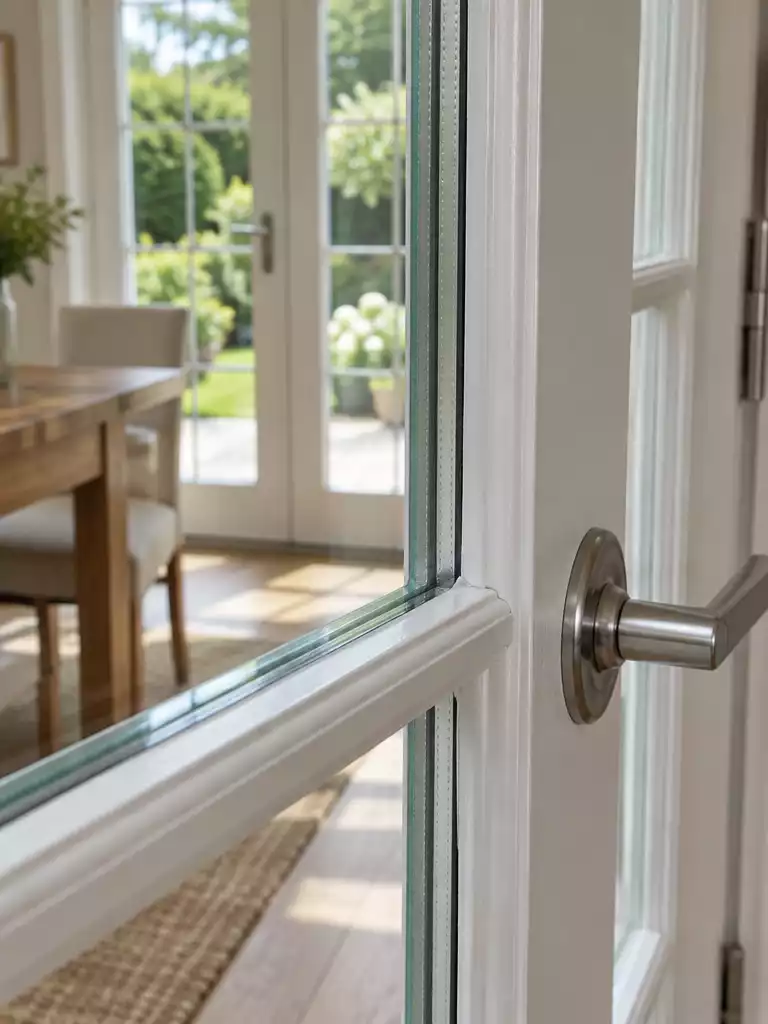
The glass spec that turns any French door into a quieter, cozier opening.
Wood, fiberglass, steel, aluminum, or vinyl — whatever frame you picked in items 1 through 5, the glass package is the other half of the energy decision. Better energy performance tends to come from heavier, better-insulated door construction plus insulated glazing, not from the frame material alone.
In practice, a door's efficiency story is written in its glazing spec, not its label. If your frame is aluminum (item 4), this is exactly where the insulation it gave up gets made back.
Exterior French doors usually need double- or triple-pane glass for efficiency, noise control, and security — single pane is the floor and inadequate outside. Home-improvement and consumer cost guides treat double pane as the common baseline, with the upgrades stacking from there.
Compare the glass, not just the label. When two doors look identical in the showroom, these four specs are what separate them:
- Glazing type — single, double, or triple pane
- Low-E coating — on the glass or absent
- Gas fill — argon between the panes or none
- Published efficiency ratings — anything the manufacturer lists
Buying for looks without checking energy ratings is one of the documented French-door mistakes — this list is the fix.
The payoffs reach past the energy bill, too. Double or triple panes quiet a pair that faces a street, and stronger glass closes the security gap a thin pane leaves open.
Security doesn't end at the glass, though — quality locks and a frame that holds the load without flexing carry the rest, which is item 9's subject.
One honest limit before you shop: no reliable source publishes a French-door-specific savings figure or a guaranteed energy-payback period, so this guide won't invent one.
The defensible claim is simpler — better glazing improves efficiency, noise control, and security. Full stop.
💡 How the Glass Package Actually Works:
Two panes of glass beat one not because the glass is thicker, but because of the sealed gap between them. Heat crosses that trapped air (or argon) slowly, and the low-E coating reflects radiant heat without dimming the light. That's why performance lives in the glass package, not the frame label.
Why your frame matters less: The panes, gap, and coating do the insulating — whichever frame you picked above.
Standard sizes and rough-opening measurements
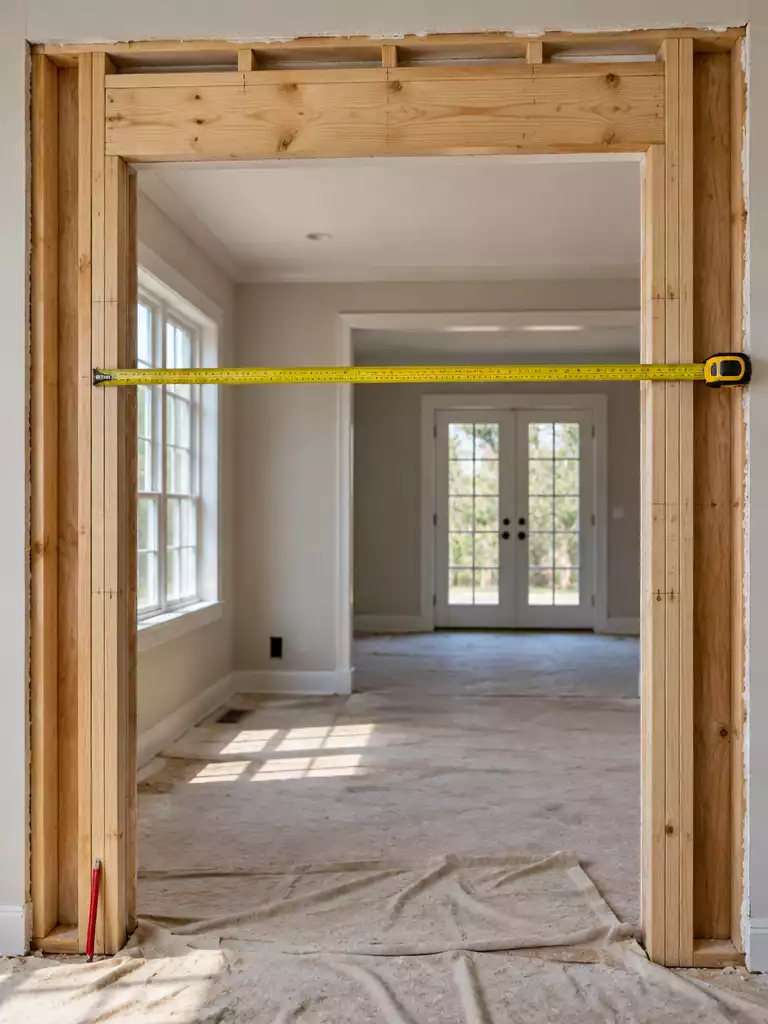
Measure the rough opening first — then know if it's a swap or a framing job.
Most French door pairs total roughly 60 to 72 inches wide and stand 80 inches high, and the size most often called standard — 72 by 80 inches — puts each slab at 36 by 80 inches. That's the most common reference point in catalogs, not a law.
Here's how the common sizes actually stack up.
Measure the rough opening, not just the finished opening, before you order anything. The finished opening is dressed with trim and casing — the door unit has to fit the framed space behind it.
Custom sizing or framing changes raise cost and complexity quickly. And a size mismatch discovered after the unit arrives is exactly how a simple door swap turns into a carpentry project.
Choosing the wrong opening size is one of the recognized French-door mistakes. The tape measure — used before you order, not after the unit shows up — is the fix.
One measurement also decides who does the install: if the rough opening needs resizing, the job moves out of DIY territory and into a professional's hands. Item 8 covers what that professional work involves and what it costs.
Before you shop, do this:
- Measure width at the rough opening, stud to stud
- Measure height at the rough opening, floor to header
- Write both numbers down before browsing a single door listing
🔢 Measure in This Order — It Saves Rework:
One number jotted down in a hurry is how mismatched units happen — measuring in a set sequence catches problems while they're still free to fix.
- Measure the rough opening width at top, middle, and bottom — the smallest number governs.
- Compare the two diagonal measurements to confirm the opening is actually square.
- Measure height from subfloor to header, noting any floor finish that isn't down yet.
Installation: DIY or hire a pro
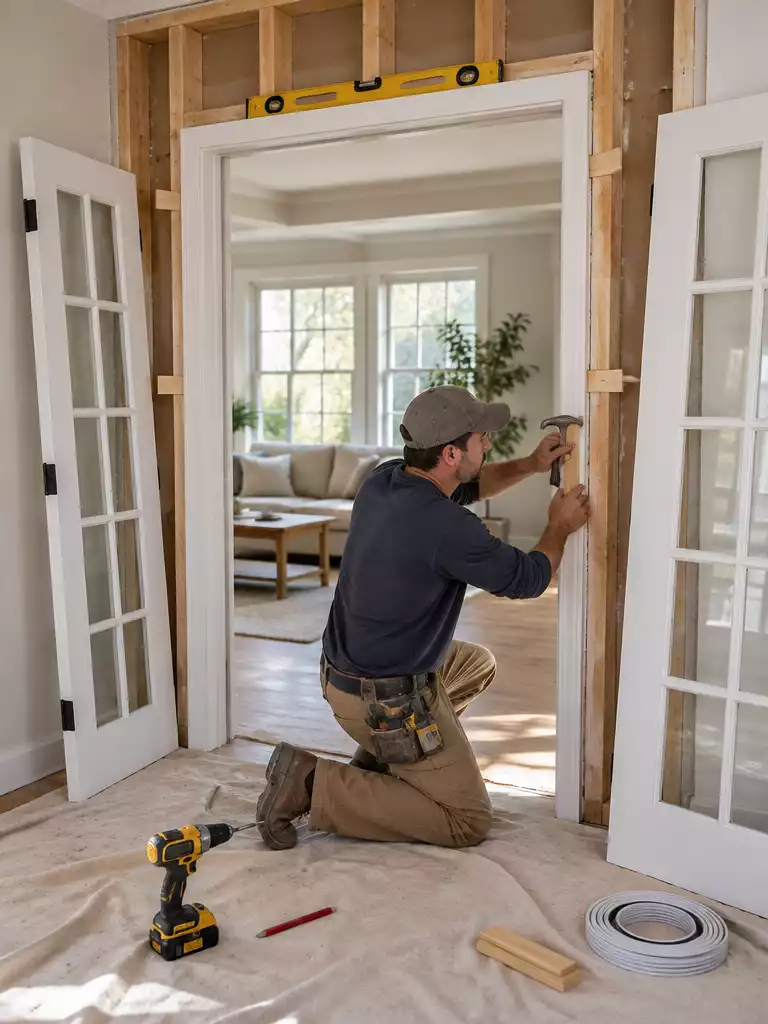
Get the install right the first time and your doors seal and swing perfectly.
One recent home-improvement estimate puts professional installation labor at $140 to $600, with total installed prices varying widely by material, size, and structural needs. Consumer cost guides place full installed projects roughly in the low thousands for standard openings, with exterior sets costing more because they demand weatherproofing, stronger glass, and better hardware.
A standard pro job takes two to five hours — which tells you the difficulty was never time. It's getting the opening, sealing, shimming, and alignment correct the first time.
So where does that leave DIY? The honest line is narrower than most people hope.
Here's what a pro is actually doing inside those two to five hours — the sequence that separates a door that works from one that fights you every winter:
- Verify the rough opening before anything comes off the wall
- Shim the frame square and plumb
- Fasten the frame to the framing
- Flash and seal the exterior
- Hang and adjust both panels so they close evenly
- Check locks, sweeps, and weatherstripping
What skipping that sequence costs
Poor installation leads to air and water leaks, rot, stuck or uneven operation, failed weather seals, compromised security, and higher energy bills. An opening altered incorrectly can cascade from a simple replacement into carpentry, structural repairs, drywall and trim replacement — sometimes water-damage remediation.
The trap behind most of these failures: assuming a door set swaps in without adjusting the frame, threshold, or surrounding trim. On exterior doors, water management and alignment matter as much as the slab itself.
There's no universal DIY-versus-pro threshold — it depends on the opening, your local code, and your weatherproofing skill. That's exactly why plenty of homeowners who DIY everything else still hire out exterior French doors.
🧰 Questions for Your French-Door Installer:
- Who verifies the opening? Ask whether they measure the rough opening themselves or build the quote around your numbers alone.
- What does the quote include? Confirm flashing, threshold sealing, and trim adjustments are priced in — not billed as surprises later.
- What happens if it drifts? Request the workmanship terms in writing, including return visits if panels stop closing evenly after settling.
Security hardware and egress requirements
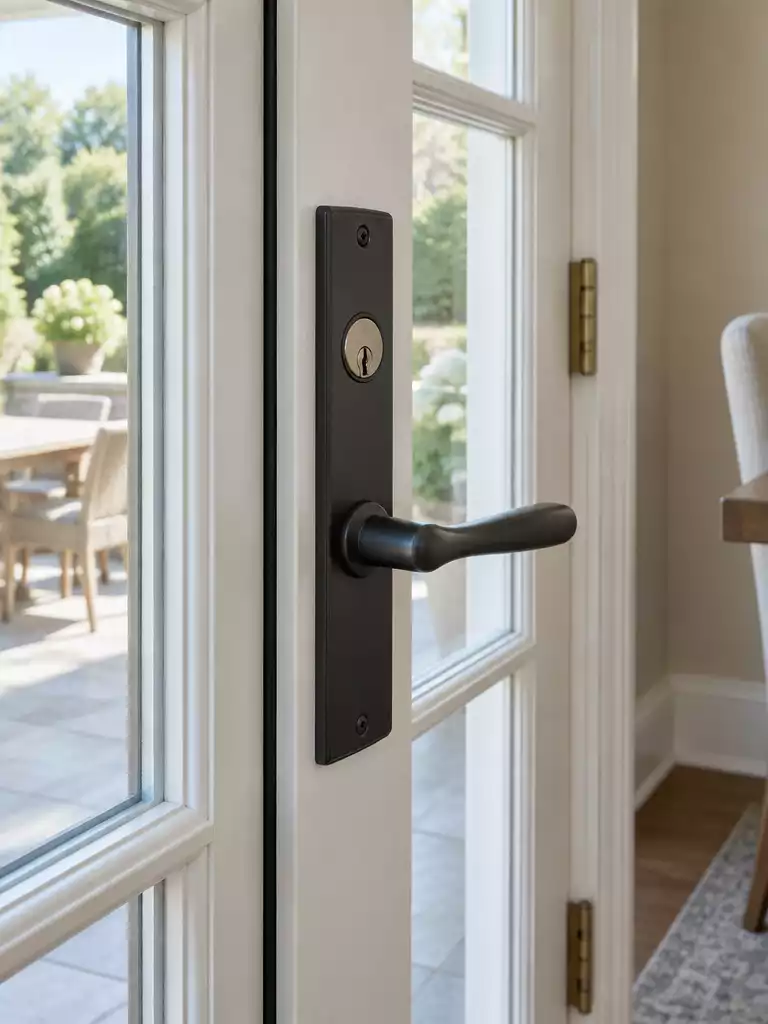
Strong glass, solid locks, and a rigid frame turn your French doors into real security.
That matte black multipoint lock on the door you're eyeing only works if the frame behind it can back it up. Security on a French door is a system — glass, hardware, and frame — and it matters most on ground-floor, street-facing, or rear exterior pairs.
Run every exterior pair through this three-point check before you order:
- Stronger glass. Exterior pairs should be double- or triple-pane (item 6) — single panes leave an energy gap and a security gap at the same time.
- Quality multipoint or robust deadbolt hardware. A multipoint lock latches the panel at several points along the edge instead of just one.
- A frame built to hold the lockset and hinge loads without flexing. Two glazed panels are heavy, and the hinges and strike side carry that weight on every open and close.
A heavy-duty lock bolted into a frame that flexes doesn't deliver — the frame is part of the lock.
That nuance is where item 3's steel gets put in context: steel wins the slab-strength contest, but a strong slab with weak hardware still underperforms. Glass plus hardware plus frame is the full score, and no single component carries it alone.
The egress side is where this stops being optional. If your pair serves as an exit or egress point, it has to satisfy local residential code for clear opening size and escape function.
One manufacturer reference ties an egress opening width figure directly to IRC requirements — the kind of number that varies by product line and jurisdiction, so it lives on the spec sheet and in your local code, not in this article. Check both before you order, while changing your pick still costs nothing.
Decided at purchase — not after installation
Egress and security requirements surface at the product-selection stage, because a code miss isn't fixable with hardware later. Ignoring security or code needs is a documented common French-door mistake — this check is the prevention.
No single code rule generalizes to every jurisdiction, so verification is local by definition. Build it into the purchase itself — checking widths and hardware specs is part of choosing the door, not an afterthought once it's hung.
🔢 The Right Order to Lock This In:
Working backward from locks to code is how buyers end up with a beautiful pair that can't legally serve as the exit.
- Decide whether the pair will serve as an exit or egress point.
- Check the manufacturer's spec sheet and local code for required clear-opening width.
- Choose glass and multipoint or deadbolt hardware a rigid frame can actually support.
Routine maintenance and seal checks
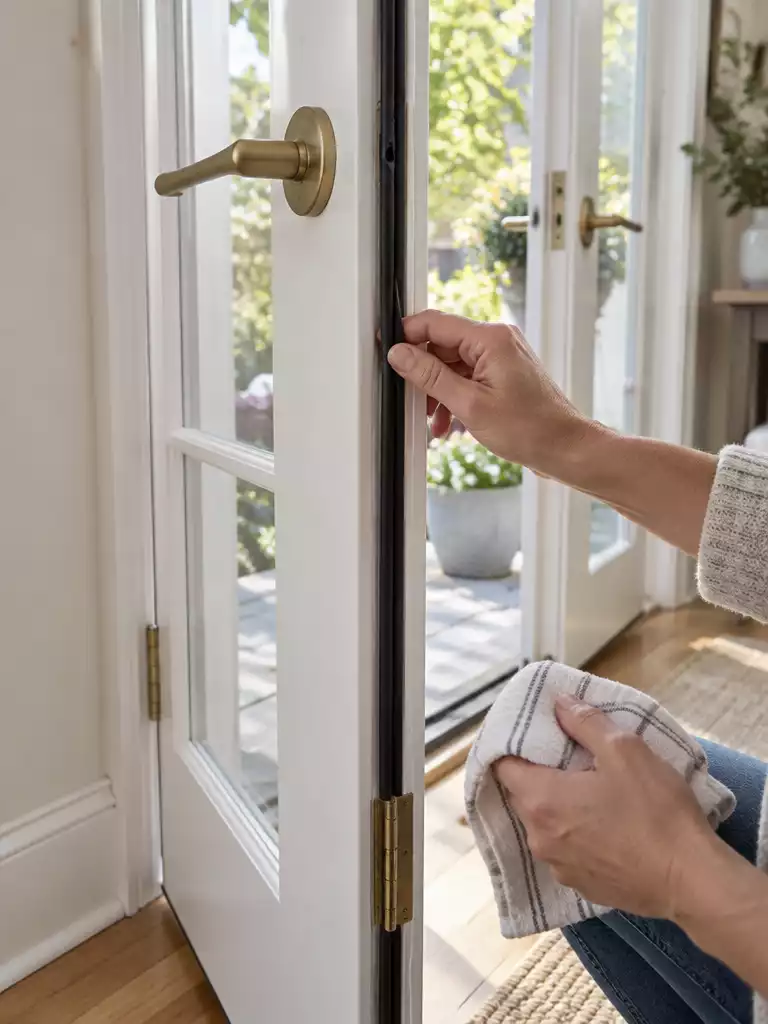
A few minutes of seal checks keeps your French doors closing smoothly for years.
If you picked wood back in item 1, the repaint-or-reseal cycle you signed up for comes due right here. This is also the routine that stops the leaks, rot, and stuck panels from item 8 before they start.
The whole routine is four recurring checks:
- Keep the seals clean — dirt on the weatherstripping keeps it from sealing flush against the frame.
- Inspect the caulk and flashing — this is the exterior sealing that keeps water out, and unnoticed gaps here are where rot begins.
- Lubricate the hardware — hinges, locks, and any multipoint mechanism so both panels keep closing evenly.
- Repaint or reseal wood finishes as needed — the standing commitment wood owners made back in item 1.
Failed weather seals and unnoticed caulk or flashing gaps are exactly how the air leaks, rot, and higher energy bills from item 8 begin — even after a good installation. These failures start quietly.
The signal to act: a draft at the edge of a panel, or a door that stops closing evenly. That is your cue to inspect the seals and hardware — not something to live with.
None of these checks run on a published calendar, so treat the routine as periodic and act on the signals above. Wood owners simply run it more often than everyone else.
💡 Why This Routine Works:
Each check protects a different barrier, and the pair stays sound only while all hold. Clean weatherstripping keeps full contact with the frame, intact caulk and flashing keep water on the outside, and lubricated hardware keeps both panels aligned so the seals stay evenly compressed. Let one layer slip and the others take the strain.
The payoff: keep every barrier doing its job and the expensive failures never start.
That's ten French door ideas now in front of you — frame materials, glass packages, sizing, installation, security, and upkeep. You don't need to act on all of them, because a few deliberate choices carry the result.
The decision narrows quickly once three things are settled: your rough-opening dimensions, your climate and insulation priority, and how much maintenance you'll realistically take on. Start with the one or two doors that fit your home best — measure the rough opening in width and height, at the frame rather than the trim, and write both numbers down. That single measurement tells you whether this is a standard swap or a custom framing job. Get the material and the fit right, and your French doors will deliver what they promise: light, a wider opening, and a real connection between your spaces.